As I have promised you, I write down this post to explain specimen of Calculation in Draft Survey. Please also refer to the previous post Draft Survey : Procedures and Calculation.
Ok, now we could directly go to the point. The vessel has alongside at the wharf in port to discharge the grain cargo. The Ship’s Particulars shown :
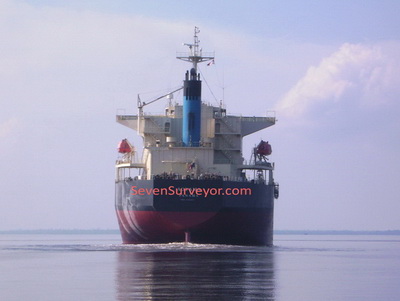
Name of Vessel : MV. OCEAN BALL, – Port of Registry (POR) : Panama, – Lenght Over All (LOA) : 182.00 M, – Lenght Between Perpendiculars (LBP) : 179.00 M, – Breath (B) : 32.20 M, – Depth (D) : 17.15 M, – Gross Tonnage (GT) : 28,342 MT, – Net Tonnage (NT) : 17,664 MT, – Summer Draft (SD) : 12.163 M, – Summer Deadweight (DWT) : 52,998 MT, – Light Ship (LS) : 7,780 MT, Constant (CS) : 320 MT, – Fore Distance to Perpendicular (Fd) : 1.70 M, – After Distance to Perpendicular (Ad) : 9.45 M. See Picture :

The Surveyor came onboard and made Draft Survey to determine the quantity of cargo on arrival. During inspection, she’s draft marks and others data finds as the followings :
– Fore Draft Port (FP) : 10.79 M / Fore Draft Starboard (FS) : 10.81 M.
– Mid Draft Port (MP) : 10.90 M / Mid Draft Starboard (MS) : 11.03 M.
– Aft Draft Port (AP) : 11.16 M / Aft Draft Starboard (AF) : 11.19 M.
– Density of Sea Water Sample (Den) : 1.021.
– Ballast Water (BW) : 265.00 Cubic Meter at Density 1.025, – Fresh Water (FW) : 183.00 MT.
– Fuel Oil (FO) : 612.00 MT, – Diesel Oil (DO) : 161.00 MT, – Lub Oil (LO) : 29.00 MT.
Continue reading “Draft Survey: Specimen of Calculation”